

Can seam tracking sensors be used in shipbuilding welding? That's a question I often get asked as a supplier of seam tracking sensors. In this blog, I'll share my insights on this topic and explain how our sensors can be a game - changer in shipbuilding welding.
Shipbuilding is a complex and demanding industry. Welding is one of the most critical processes in ship construction. High - quality welds are essential for the structural integrity and safety of ships. However, ship welding comes with its own set of challenges. The large size of ship components, the complexity of the welding joints, and the presence of various types of materials make it difficult to achieve precise and consistent welds.
This is where seam tracking sensors come in. Seam tracking sensors are devices that can detect the position of the welding seam in real - time and adjust the welding torch accordingly. They use different technologies such as laser, vision, and ultrasonic to sense the seam.
Let's talk about the benefits of using seam tracking sensors in shipbuilding welding. First of all, they improve the quality of welds. By accurately tracking the seam, the sensors ensure that the welding torch is always in the right position. This reduces the chances of weld defects such as porosity, lack of fusion, and uneven bead width. For example, in a large - scale shipbuilding project, a single weld defect can lead to significant structural problems and costly repairs. With seam tracking sensors, these risks are minimized.
Secondly, seam tracking sensors increase productivity. In traditional ship welding, welders often have to spend a lot of time manually adjusting the position of the welding torch. This is not only time - consuming but also requires a high level of skill. Seam tracking sensors automate this process, allowing welders to focus on other aspects of the welding operation. As a result, the overall welding speed can be increased, and the project can be completed more quickly.
Another advantage is that seam tracking sensors can work in harsh environments. Shipyards are often noisy, dusty, and have high levels of heat. Our sensors are designed to withstand these conditions and still provide accurate seam tracking. They are built with robust materials and advanced technology to ensure reliable performance.
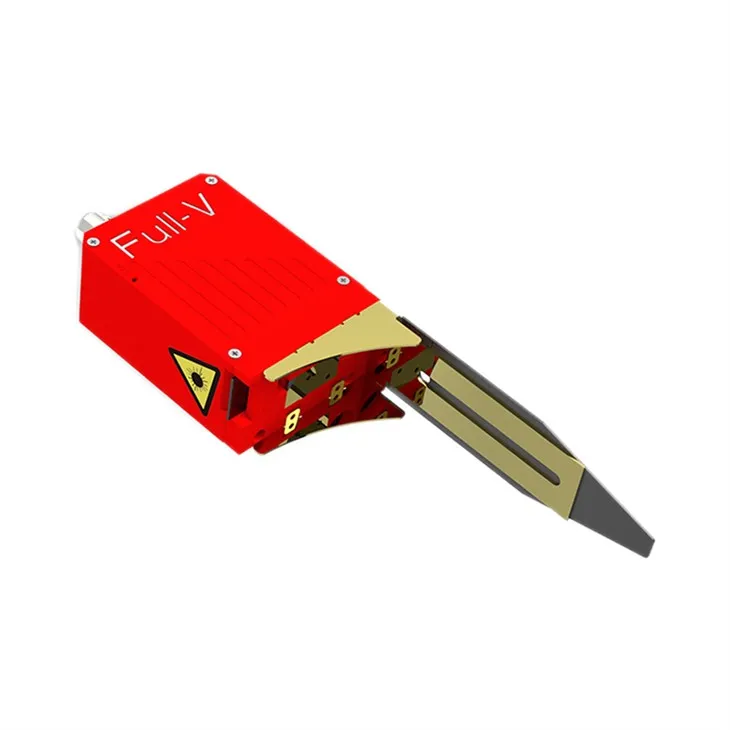
Now, let's take a look at some of our products. We have the Butt Series Laser Weld Tracking Sensor FV - 210 - ZO - TD. This sensor is specifically designed for thin - butt welding applications in shipbuilding. It uses advanced laser technology to detect the seam with high precision. The FV - 210 - ZO - TD can handle a wide range of welding speeds and is compatible with different types of welding machines.
We also offer the Butt Series Laser Weld Tracking Sensor FV - 150 - ZO - TD. This sensor is a bit more compact and is suitable for smaller - scale shipbuilding projects or for welding in tight spaces. It provides accurate seam tracking and can be easily integrated into existing welding systems.
In addition to the technical advantages, our sensors are also easy to use. We provide comprehensive training and support to our customers, so they can quickly get up to speed with the sensors. Our team of experts is always available to answer any questions and provide on - site assistance if needed.

However, there are also some challenges when using seam tracking sensors in shipbuilding. One of the main challenges is the integration of the sensors with existing welding equipment. Shipyards often have a variety of welding machines and control systems, and ensuring compatibility can be a complex task. But we have a team of engineers who are experienced in integrating our sensors with different types of equipment. They can work with shipyards to customize the installation and configuration of the sensors to meet their specific needs.
Another challenge is the cost. Seam tracking sensors are an investment, and some shipyards may be hesitant to adopt them due to the upfront cost. However, it's important to consider the long - term benefits. The improved weld quality and increased productivity can lead to significant cost savings in the long run. For example, fewer weld defects mean less rework and lower repair costs.
In conclusion, seam tracking sensors can definitely be used in shipbuilding welding. They offer a range of benefits, including improved weld quality, increased productivity, and the ability to work in harsh environments. Our products, such as the Butt Series Laser Weld Tracking Sensor FV - 210 - ZO - TD and the Butt Series Laser Weld Tracking Sensor FV - 150 - ZO - TD, are designed to meet the specific needs of the shipbuilding industry.
If you're in the shipbuilding business and are interested in learning more about how our seam tracking sensors can benefit your welding operations, we'd love to hear from you. Contact us to start a discussion about your requirements and how we can help you achieve better welding results.
References:
- Industry reports on shipbuilding welding technology
- Technical specifications of our seam tracking sensors