


Medium Range Laser Weld Tracking Sensor
Medium range laser weld tracking sensor optimizes its adaptability to large workpieces on the basis of basic weld seam tracking, making it suitable for applications such as long-distance positioning and programmable workpiece scanning. Regardless of the welding process, we can provide reliable support and stable performance to ensure excellent results in different welding scenarios.
Advantages of Medium Range Laser Weld Tracking Sensor
Welding can be performed under special conditions
It can be welded at room temperature or under special conditions, and the welding equipment is simple to install. For example, when a medium range laser weld tracking sensor passes through an electromagnetic field, the beam will not deflect; the laser can be welded in vacuum, air and certain gas environments, and can be welded through glass or materials that are transparent to the beam.
More precise processing
The medium range laser weld tracking sensor can easily split the beam in time and space, and can perform multi-beam simultaneous processing and multi-station processing, providing conditions for more precise welding.
Adaptive welding module
The adaptive welding module responds to changes in the size of the joint set and optimizes the weld size, thereby eliminating welding defects and reducing excessive welding.
Accurate
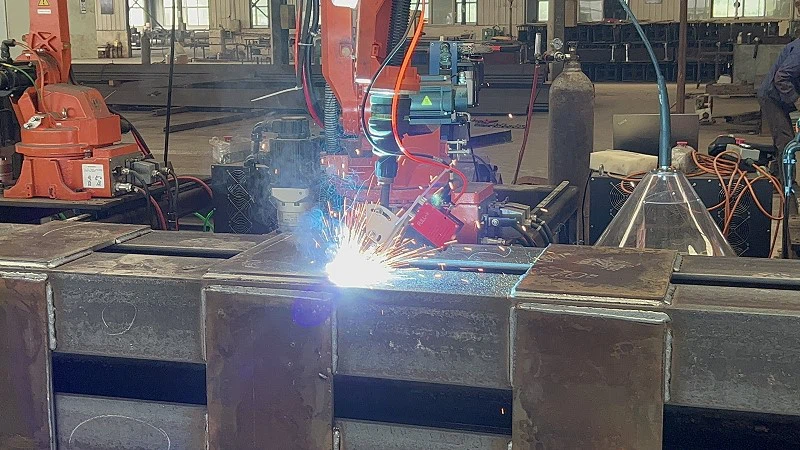
The medium range laser weld tracking sensor helps the robot accurately position the weld seam and simplifies the application of welding robots.


Why Choose Us
Profession team
We specialize in the application of 3D laser weld tracking sensors as the core, the company provides customers with 3D sensors, automatic systems exempt from programming, welding robots and completed solutions for welding specialized machine systems. Focusing on improving our own R&D and innovation capabilities, owning unique and innovative ideas in the fields of optics, electronic hardware and algorithms, and aspires to design optimal solutions for complex welding operations.
Advanced equipment
Our company has introduced advanced production equipment both domestically and internationally, including Debugging machine machines, Production machine tools, etc., which can complete the entire production process from raw material processing to product assembly.
Our certificate
Complete quality control system has been established with the ISO9001 Certification,CE Certification.
Production market
Our products support global shipping and the logistics system is complete, so our customers are all over the world. The products are not only domestically and internationally, but also exported to multiple regions such as Europe, America, Africa, and South America, earning unanimous recognition from domestic and foreign users.
Why Medium Range Laser Weld Tracking Sensors Are so Popular
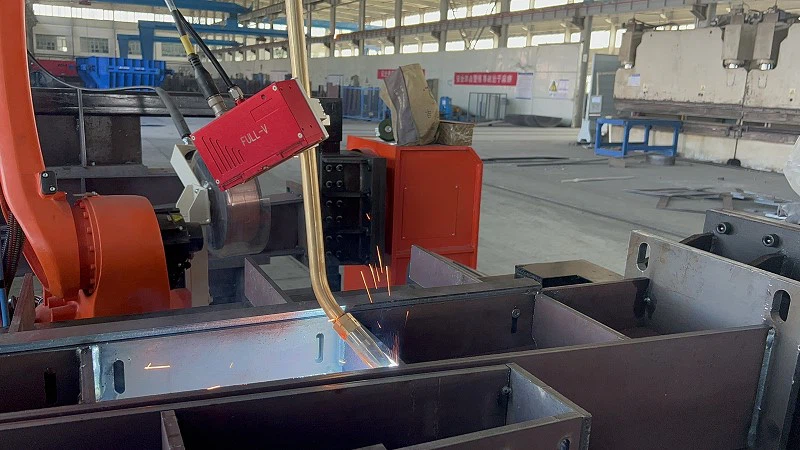
The medium range laser weld tracking sensor uses a laser to irradiate the surface of the weld seam to form a laser light band, which is received and imaged by a high-definition camera. By algorithmic processing, the three-dimensional features of the weld seam are transformed into structured information, including welding joint coordinates, misalignment, gaps, etc. This information is transmitted to the robot controller, providing the robot with the required trajectory and process parameters for welding, guiding the robot to weld or correct workpiece deviations in real-time, and achieving perfect welding work. Compared to other solutions, laser seam tracking has the advantages of non-contact, high accuracy, fast speed, and good adaptability.
The medium range laser weld tracking sensor mainly consists of a CCD camera, a semiconductor laser, a laser protection lens, a splash-proof baffle, and a wind cooling device. By using the principle of triangulation, the coordinate information of each point in the laser scanning area is obtained, and the online real-time detection of common welding seams is realized through complex program algorithms, and the robot is guided to adjust the working trajectory according to the scanning data.
Manual or medium range laser weld tracking sensor relies on the judgment of welding workers and the adjustment of process parameters to complete the tracking of welding seams. After the industrial robot is equipped with a weld seam tracking system, the equipment can calculate the error between the detected weld seam and the robot teaching trajectory through the sensor, and output error data, which is then corrected in real-time by the motion execution mechanism to accurately guide the welding gun to perform automatic welding. This is like giving the robot eyes.
For medium range laser weld tracking sensor equipment such as robots or automatic welding machines, they mostly rely on the robot’ s teaching programming and trajectory reproduction to work, so it is necessary to ensure the accuracy of the workpiece and its assembly to ensure that the welding gun can align the welding seam within the allowed precision range of the process.
However, in many cases, the accuracy and consistency of the workpiece and its assembly cannot meet the requirements of large-scale workpieces or mass production of automated welding. At the same time, during the welding process, there are uncontrollable effects of stresses and deformations caused by overheating of the workpiece. Therefore, once encountering these situations, there is a need for an active tracking device to perform operations similar to the eyes and hands of manual welding workers, that is, the medium range laser weld tracking sensor guides the equipment to work.
The principle of Medium Range Laser Weld Tracking Sensor
Determines the position
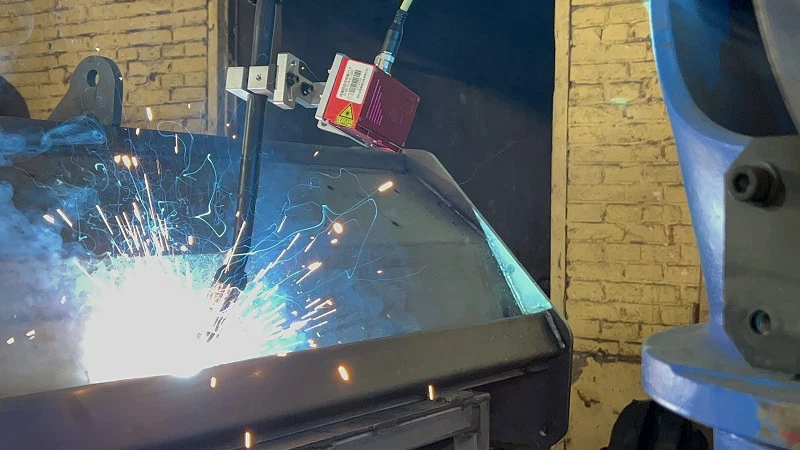
The medium range laser weld tracking sensor determines the position of the gap by capturing and analyzing the image of the gap. Sensors are installed on the welding gun or independent robot arms to follow the welding gun. Project the laser beam onto the surface of the gap, and then capture the image of the reflected laser beam by the camera. The captured images are then analyzed using advanced image processing algorithms to determine the position of the gaps.
Capture images of the suture site
Medium range laser weld tracking sensors use different techniques to capture images of the suture site. For example, stereo camera sensors use triangulation to determine the position of sutures, while visual sensors use image processing software to analyze images. The accuracy of sensors depends on the technology used, the resolution of the camera, and the complexity of the software.
Achieve automation welding process
Medium range laser weld tracking sensors can track welds and achieve automation during the welding process, improving the accuracy and efficiency of the welding process. Laser welding sensors use advanced image processing algorithms and different types of technologies to capture and analyze images of welds to determine their position and direction. These sensors can automate the welding process, reduce manual intervention, improve productivity, reduce costs, and enhance safety.

The medium range laser weld tracking sensor can be said to be a great invention for welding. With the development of technology, achieving welding automation and intelligence has become an inevitable trend. In the next few years, not only technology upgrades are needed for medium range laser weld tracking sensor, but also in terms of usage expansion, it is necessary to deepen the understanding of customer usage, meet user needs, and improve products.
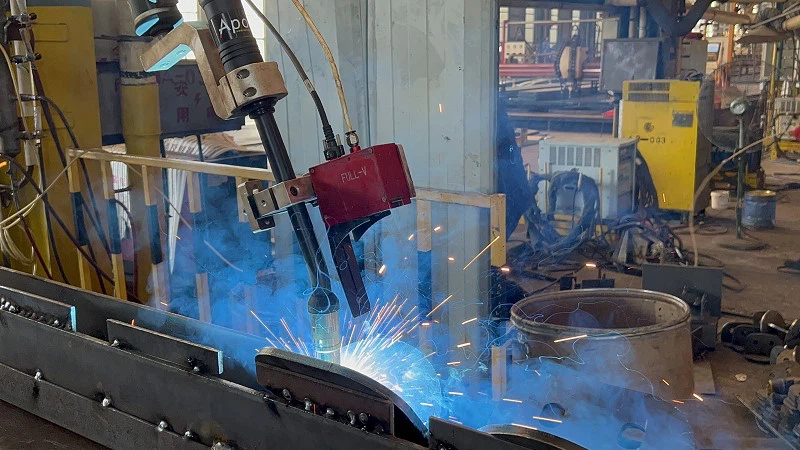
The head of the medium range laser weld tracking sensor consists of a CCD camera and one or two semiconductor lasers. The laser stripe is projected onto the workpiece surface at a predetermined angle as a structural light source. The camera directly observes the stripe at the bottom of the sensor. The front of the camera has an optical filter that allows the laser to pass through while filtering out all other light, such as welding arcs. As a result, the sensor is positioned very close to the welding arc.
The sensor is typically mounted in front of the torch at a preset distance, known as the lead, in order to observe the weld. The installation height, or the distance between the sensor body and the workpiece, varies based on the type of sensor installed. To ensure accurate observation, the welding gun should be positioned correctly above the weld so that the weld is near the center of the stripe, allowing the camera to observe both the laser stripe and the weld.
Application Range of Medium Range Laser Weld Tracking Sensor
Engineering machinery
Medium range laser weld tracking sensor series developed by laser are designed for seam tracking and finding and offline programmed welding for medium and thick plates, which is capable of effectively solving the problems caused by poor consistency, poor precision and thermal deformation of the work-piece and ensures that the weld bead is precisely deposited in the joint, thus achieving intelligent welding process. This series of products are adaptable for welding, it have been widely used in various industries, including engineering machinery, steel structure, auto industry and pipeline.
Automated welding
The optical sensors for seam tracking support automated welding processes both with arc and laser. Active seam detection scans the edge offset at the joint without contact using light bars, thus ensuring precise positioning of the tool at all times.
Harsh industrial environments
All medium range laser weld tracking sensors are designed for applications in harsh industrial environments, for example in welding cells, and impress with their exceptional robustness. The integrated stray light filtering ensures smooth operation even in the area close to processing and on critical surfaces such as stainless steel and aluminium alloys. A wide variety of joints including difficult to detect I-seams at the butt joint are detected.
Medium range laser weld tracking sensor have played a pivotal role in the evolution of welding technology. These sensors have become increasingly sophisticated, offering real-time monitoring and dynamic adjustments to welding processes. While they have already revolutionized the industry, the future holds even more exciting innovations.
The future of medium range laser weld tracking sensor will see enhanced sensing capabilities, enabling even higher levels of accuracy. Advanced sensors will be able to detect and track seams with unprecedented precision, reducing the margin for error to near zero. Artificial intelligence (AI) is making its mark in the welding industry. Weld seam tracking sensors will be equipped with AI algorithms that can adapt to changing conditions and provide real-time insights for optimal weld quality. These AI-driven sensors will be able to anticipate potential issues and make adjustments proactively.
The integration of medium range laser weld tracking sensor with robotic welding systems is a game-changer for industries where automation is prevalent. These sensors will work in harmony with robots, ensuring that the welding process remains precise and efficient, even when dealing with complex workpieces. The data collected by weld seam tracking sensors will be used for more in-depth analysis. This will lead to better insights into welding processes, helping companies optimize their welding procedures, reduce waste, and enhance productivity. As these innovations unfold, advanced weld seam tracking sensors will find applications in a wide range of industries and processes.
The future of welding is bright, with innovations in medium range laser weld tracking sensor leading the way. These sensors are propelling welding into an era of unprecedented precision, efficiency, and adaptability. As they become more sophisticated and integrated with AI and other advanced technologies, weld seam tracking sensors are transforming industries that rely on welding for critical applications. This evolution not only ensures high-quality welds but also opens doors to new possibilities in manufacturing and construction.

Process Welding Quality Monitoring of Weld Seams Using Medium Range Laser Weld Tracking Sensor
Simulation of weld imperfections
Based on knowledge of medium range laser weld tracking sensor and hybrid laser welding and discussions with end users of laser welding, potential parameter variations, which might be expected to arise in a production, were established. These factors, associated with process parameters, joint preparation and fit-up, are likely causes of different weld imperfections.
Experimental set-up
The autogenous laser welding trials were carried out using a medium range laser weld tracking sensor, manufactured. The laser beam was delivered via a step index optical fibre, 600µm in diameter, to an output housing utilising a 200mmfocusing lens, to produce a nominal minimum spot size of 0.6mm in diameter. A Servo-Robot seam tracker was used to follow the joint seam during welding. A plume suppression gas jet (argon) was angled at 40° to the surface of the workpiece, trailing the laser beam, with an impingement point 1mm above the laser beam focus. A high pressure air knife was used to protect the laser optics during welding. The actual housing and seam tracker were mounted onto a robot, traversing the arrangement over the specimen, held in a stationary jig, during welding.
In-process monitoring of the welding
The first sensor, described bymedium range laser weld tracking sensor, detects radiation in the wavelength range less than 600nm. When welding steel with laser light a high temperature, thermally excited gas or 'plume' is expected rather than an ionized plasma. In practice, these plumes are very energetic in the visible part of the spectrum and hence it was hoped that any fluctuations in the medium range laser weld tracking sensor, due to problems during welding would be visible using the plasmasensor. The second sensor, referred to as the 'temperature' sensor, is sensitive in the infrared part (1100-1800nm) of the spectrum and was arranged to pick up signals from the molten weld pool. The third sensor, referred to as the'back reflection' or 'reflectivity' sensor, detects a narrow band of radiation centred around the wavelength of 1.06µm ( i.e. the laser wavelength) reflected from the workpiece during processing.
Our Factory
Suzhou Full-v was founded in 2019 and has served thousands of users both domestically and internationally, gaining unanimous recognition from users. The Full-v 3D laser intelligent weld seam tracking system has achieved full coverage matching among mainstream robot manufacturers both domestically and internationally, and has the characteristics of simplicity, reliability, and widespread use. The company is committed to providing open and customized optoelectronic sensor equipment and technical services, always prioritizing product quality and user experience. With a spirit of continuous improvement as a craftsman, we provide customers with reliable and stable products.
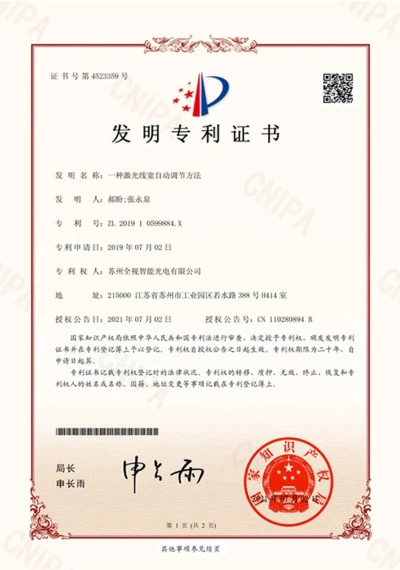
certificate



FAQ
Q: What is a medium-range laser weld tracking sensor?
Q: How does a medium-range laser weld tracking sensor work?
Q: What are the key advantages of using a medium-range laser weld tracking sensor?
Q: In what welding scenarios are medium-range laser weld tracking sensors commonly used?
Q: What components make up a medium-range laser weld tracking sensor system?
Q: How can medium-range laser weld tracking sensors contribute to weld quality improvement?
Q: How do medium-range laser weld tracking sensors adapt to complex welding geometries?
Q: Are medium-range laser weld tracking sensors suitable for high-speed welding applications?
Q: What safety considerations should be taken into account when using medium-range laser weld tracking sensors?
Q: How can medium-range laser weld tracking sensors help in reducing material waste?
Q: Can medium-range laser weld tracking sensors monitor weld penetration depth?
Q: What data analysis capabilities do medium-range laser weld tracking sensors offer?
Q: How do medium-range laser weld tracking sensors contribute to quality assurance in welding?
Q: Can medium-range laser weld tracking sensors be used for in-process inspection?
Q: Can medium-range laser weld tracking sensors be integrated with robotic welding systems?
Q: How do medium-range laser weld tracking sensors support process optimization?
Q: Are there different types of medium-range laser weld tracking sensors available?
Q: What factors should be considered when selecting a medium-range laser weld tracking sensor?
Q: How can medium-range laser weld tracking sensors enhance productivity in manufacturing?
Q: What role do medium-range laser weld tracking sensors play in ensuring weld consistency?
Suzhou Full-V Intelligent Optoelectronics Co., Ltd. is one of the most reliable manufacturers and suppliers of medium range laser weld tracking sensor in China. As we have world-leading production equipment and strong manufacturing capabilities, we warmly welcome you to buy high quality customized products at competitive price from our factory.
Medium Range Laser Weld Tracking Sensor FV 160 WD, Medium Range Laser Weld Tracking Sensor FV 240 WD, Medium Range Laser Weld Tracking Sensor