

Hey there! I'm a supplier of seam tracking sensors, and today I wanna chat about how these nifty sensors work hand in hand with welding torches. It's a pretty cool process that can really up your welding game, so let's dive right in.
First off, let's talk about what seam tracking sensors are. These sensors are like the eyes of the welding operation. They're designed to detect the position of the weld seam in real - time. You see, in a welding job, it's super important to keep the welding torch right on the seam. If the torch goes off - track, you can end up with a lousy weld, and that's just not what we want.
There are different types of seam tracking sensors out there, but one of the most popular ones is the laser - based sensor. Laser sensors work by emitting a laser beam onto the surface near the weld seam. The light from the laser reflects back to the sensor, and based on how the light is reflected, the sensor can figure out the shape and position of the seam.
Now, let's get to the main question: how do these sensors cooperate with welding torches? Well, it all starts with the installation. The seam tracking sensor is usually mounted close to the welding torch. This way, it can accurately monitor the area where the welding is happening.
Once the sensor is in place, it starts doing its job. It continuously sends data about the seam's position to a control system. This control system is like the brain of the whole operation. It takes the data from the sensor and uses it to adjust the position of the welding torch.
Let's say you're welding a long, straight seam. But due to some minor irregularities in the workpiece, the seam might start to veer off a bit. The sensor will quickly detect this change in the seam's position. It sends this new information to the control system, which then calculates how much the torch needs to move to stay on the seam. The control system then sends a signal to the torch's actuators. These actuators are like little motors that can move the torch in different directions. They adjust the position of the torch so that it stays right on top of the seam.
In more complex welding scenarios, like when you're welding a curved or irregular seam, the cooperation between the sensor and the torch becomes even more crucial. The sensor has to constantly adapt to the changing shape of the seam. It sends a stream of data to the control system, which in turn makes continuous adjustments to the torch's position.
For example, if you're using our Butt Series Laser Weld Tracking Sensor FV - 150 - ZO - TD, it's designed to handle a variety of seam shapes and sizes. It can quickly and accurately detect the position of the seam, even in challenging conditions. The control system then uses this data to make precise adjustments to the welding torch, ensuring a high - quality weld every time.

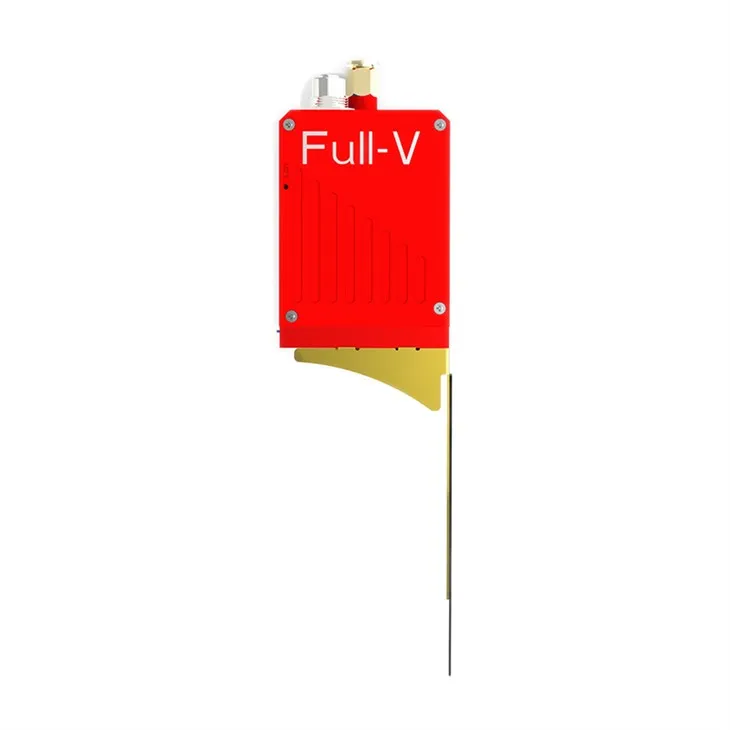
Another great option is our Butt Series Laser Weld Tracking Sensor FV - 210 - ZO - TD. This sensor has advanced features that allow it to work with different types of welding processes. It can communicate with the control system in real - time, making sure that the welding torch is always in the right place.
One of the key benefits of having a good cooperation between the seam tracking sensor and the welding torch is the improvement in weld quality. When the torch stays on the seam, you get a more consistent weld bead. The heat is distributed evenly, which reduces the chances of defects like porosity, cracks, or uneven penetration.
It also increases productivity. Without a seam tracking sensor, a welder would have to constantly monitor the seam and manually adjust the torch's position. This is not only time - consuming but also prone to human error. With a sensor, the process becomes automated, and the welder can focus on other important aspects of the job.
In addition, it saves on materials. A poor - quality weld might require rework, which means using more welding wire, gas, and time. By ensuring that the weld is done right the first time, the cooperation between the sensor and the torch helps to minimize waste.
If you're in the welding industry, you know how important it is to have the right tools. Our seam tracking sensors can make a big difference in your welding operations. Whether you're doing small - scale projects or large - scale industrial welding, our sensors can help you achieve better results.
If you're interested in learning more about our seam tracking sensors or want to discuss how they can fit into your specific welding needs, don't hesitate to reach out. We're always here to help you find the best solution for your business.
References:
- Welding Handbook, American Welding Society
- Industrial Automation and Control Systems, Various Industry Publications