

Inductive weld tracking sensors play a crucial role in modern welding processes, enhancing precision, efficiency, and quality. As a trusted supplier of weld tracking sensors, I am excited to delve into the functionality of inductive weld tracking sensors in this blog post.
Understanding the Basics of Inductive Weld Tracking Sensors
Inductive weld tracking sensors are designed to detect the position of the weld joint during the welding process. They operate based on the principle of electromagnetic induction. When an alternating current is passed through a coil in the sensor, it creates a magnetic field. When a conductive object, such as the workpiece being welded, enters this magnetic field, it induces eddy currents in the object. These eddy currents, in turn, create their own magnetic fields that interact with the original magnetic field of the sensor. This interaction causes a change in the impedance of the sensor coil, which can be measured and used to determine the position of the weld joint.
Components of an Inductive Weld Tracking Sensor
An inductive weld tracking sensor typically consists of several key components:
- Sensor Coil: This is the core component of the sensor. It is responsible for generating the magnetic field and detecting the changes in impedance caused by the presence of the workpiece.
- Signal Processing Unit: This unit receives the signals from the sensor coil, processes them, and converts them into a usable form. It can include amplifiers, filters, and analog-to-digital converters.
- Output Interface: This interface allows the sensor to communicate with other components of the welding system, such as the welding robot or the controller. It can be a digital interface, such as Ethernet or Profibus, or an analog interface, such as a 4-20 mA current loop.
- Mechanical Housing: This housing protects the internal components of the sensor from the harsh environment of the welding process. It is usually made of a durable material, such as stainless steel, and is designed to withstand high temperatures, vibrations, and dust.
How Inductive Weld Tracking Sensors Function in a Welding Process
The functioning of an inductive weld tracking sensor can be divided into several steps:

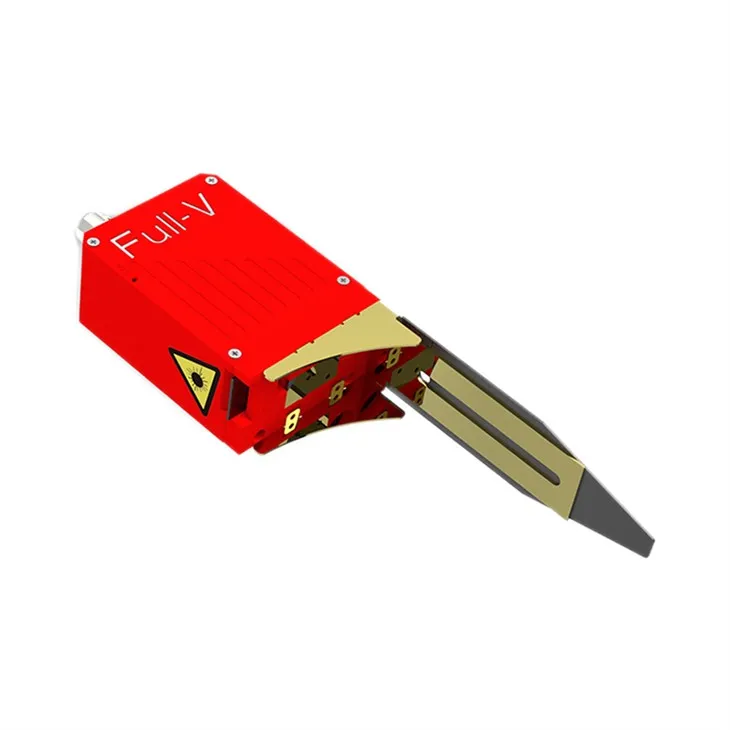
- Initial Setup: Before the welding process begins, the sensor is installed in the appropriate position relative to the weld joint. The sensor is then calibrated to ensure accurate detection. This may involve adjusting the sensitivity of the sensor and setting the reference position for the weld joint.
- Detection of the Weld Joint: As the welding process starts, the sensor continuously monitors the magnetic field around the weld joint. When the workpiece enters the magnetic field of the sensor, the eddy currents are induced, and the impedance of the sensor coil changes. The signal processing unit detects this change and converts it into a position signal.
- Tracking and Adjustment: The position signal is sent to the welding system's controller. The controller then compares the actual position of the weld joint with the desired position. If there is a deviation, the controller sends a command to the welding robot or other actuator to adjust the position of the welding torch to keep it aligned with the weld joint.
- Continuous Monitoring and Feedback: The sensor continues to monitor the position of the weld joint throughout the welding process. It provides continuous feedback to the controller, allowing for real-time adjustments to be made. This ensures that the welding torch remains accurately positioned, even if there are variations in the workpiece or the welding conditions.
Advantages of Inductive Weld Tracking Sensors
Inductive weld tracking sensors offer several advantages over other types of weld tracking sensors:
- Non-Contact Detection: Inductive sensors do not need to make physical contact with the workpiece, which reduces wear and tear on the sensor and extends its lifespan. It also eliminates the risk of damage to the workpiece surface.
- High Precision: These sensors can provide accurate position detection, even in challenging environments. They are capable of detecting small changes in the position of the weld joint, which helps to ensure high-quality welds.
- Fast Response Time: Inductive sensors have a fast response time, allowing them to quickly detect changes in the position of the weld joint and provide timely feedback to the welding system. This enables real-time adjustments to be made, improving the efficiency of the welding process.
- Robustness: Inductive sensors are designed to withstand the harsh conditions of the welding environment, including high temperatures, vibrations, and dust. They are reliable and require minimal maintenance.
Applications of Inductive Weld Tracking Sensors
Inductive weld tracking sensors are widely used in various industries, including automotive, aerospace, shipbuilding, and general manufacturing. Some common applications include:
- Automotive Manufacturing: In the automotive industry, inductive weld tracking sensors are used to ensure the accurate welding of body panels, frames, and other components. They help to improve the quality and consistency of the welds, which is essential for the safety and reliability of the vehicles.
- Aerospace Industry: In the aerospace industry, where high precision and quality are critical, inductive weld tracking sensors are used to weld components such as engine parts, fuselage sections, and wing structures. They help to meet the strict quality standards required in this industry.
- Shipbuilding: In shipbuilding, inductive weld tracking sensors are used to weld large steel structures, such as hulls and decks. They help to ensure the integrity of the welds, which is crucial for the safety and performance of the ships.
- General Manufacturing: In general manufacturing, inductive weld tracking sensors are used in a variety of welding applications, such as the production of machinery, equipment, and consumer goods. They help to improve the efficiency and quality of the welding process, reducing costs and increasing productivity.
Our Product Offerings
As a leading supplier of weld tracking sensors, we offer a wide range of inductive weld tracking sensors to meet the diverse needs of our customers. Two of our popular products are the Butt Series Laser Weld Tracking Sensor FV-210-ZO-TD and the Butt Series Laser Weld Tracking Sensor FV-150-ZO-TD. These sensors are designed with advanced technology to provide high precision and reliability in weld tracking applications.
Contact Us for Procurement and Consultation
If you are interested in learning more about our inductive weld tracking sensors or have any questions regarding your specific welding needs, we encourage you to contact us. Our team of experts is ready to assist you in selecting the most suitable sensor for your application and providing you with detailed technical support. Whether you are a small manufacturing company or a large industrial enterprise, we are committed to helping you achieve the highest level of quality and efficiency in your welding processes.
References
- "Welding Handbook", American Welding Society
- "Industrial Sensors: Principles, Characteristics, and Applications", Springer