

As a supplier of Round Hole Plug Welding Private Switch, I am often asked about the process flow of round hole plug welding in private switches. In this blog post, I will provide a detailed overview of this process, highlighting its importance and the steps involved.
Understanding Round Hole Plug Welding in Private Switches
Round hole plug welding is a crucial technique used in the manufacturing of private switches, especially in applications where a strong and reliable electrical connection is required. This welding method involves filling a pre-drilled round hole in one metal part with molten metal from another part, creating a solid joint. The process is widely used in the production of panel-type radiators for transformers welding, where the integrity of the electrical connections is paramount.
The Process Flow of Round Hole Plug Welding in Private Switches
Step 1: Preparation
The first step in the round hole plug welding process is preparation. This involves selecting the appropriate materials for the switch components, including the base metal and the filler metal. The base metal is typically the main body of the switch, while the filler metal is used to fill the round holes. It is essential to ensure that the materials are compatible and have the necessary mechanical and electrical properties.
Once the materials are selected, the next step is to prepare the surfaces for welding. This includes cleaning the base metal to remove any dirt, grease, or oxide layers that could affect the quality of the weld. The round holes are also drilled to the required size and depth, ensuring that they are clean and free from debris.
Step 2: Fixturing
After the surfaces are prepared, the switch components are fixtured in place to ensure proper alignment during the welding process. Fixturing is crucial to maintain the correct position of the round holes and to prevent any movement or distortion during welding. Special fixtures are designed to hold the components securely and accurately, ensuring that the welding process can be carried out with precision.
Step 3: Welding
The actual welding process begins once the components are fixtured. There are several welding methods that can be used for round hole plug welding, including resistance welding, arc welding, and laser welding. The choice of welding method depends on various factors, such as the materials being welded, the size and depth of the round holes, and the required welding quality.
In resistance welding, an electric current is passed through the components to generate heat at the interface between the base metal and the filler metal. The heat causes the filler metal to melt and fill the round holes, creating a solid joint. Resistance welding is a fast and efficient method that is commonly used in mass production.
Arc welding, on the other hand, uses an electric arc to melt the filler metal and create the weld. This method is suitable for welding thicker materials and can provide a stronger and more durable joint. Laser welding is a high-precision welding method that uses a laser beam to melt the filler metal. It is often used for welding small and intricate components, where accuracy is crucial.
During the welding process, it is essential to control the welding parameters, such as the current, voltage, and welding time, to ensure a high-quality weld. The welding parameters are typically determined based on the materials being welded and the welding method used.
Step 4: Inspection
Once the welding process is complete, the welded components are inspected to ensure that the welds meet the required quality standards. Inspection methods may include visual inspection, non-destructive testing, and mechanical testing. Visual inspection is used to check for any visible defects, such as cracks, porosity, or incomplete fusion. Non-destructive testing methods, such as ultrasonic testing or X-ray testing, can be used to detect internal defects that are not visible to the naked eye. Mechanical testing, such as tensile testing or hardness testing, can be used to evaluate the strength and durability of the welds.
If any defects are found during the inspection, the welded components may need to be reworked or discarded. It is essential to address any quality issues promptly to ensure that the final product meets the required specifications.
Step 5: Post-Welding Treatment
After the inspection, the welded components may undergo post-welding treatment to improve their mechanical and electrical properties. Post-welding treatment may include heat treatment, surface finishing, or coating. Heat treatment can be used to relieve residual stresses in the welds and improve the hardness and toughness of the materials. Surface finishing can be used to improve the appearance of the components and to protect them from corrosion. Coating can be applied to provide additional insulation and protection against environmental factors.
Importance of Round Hole Plug Welding in Private Switches
Round hole plug welding plays a crucial role in the manufacturing of private switches, especially in applications where a reliable electrical connection is required. The solid joints created by round hole plug welding ensure that the switch can withstand high currents and voltages without experiencing any electrical failures. This is particularly important in panel-type radiators for transformers welding, where the switches are used to control the flow of electricity and to protect the transformer from overheating.
In addition to providing a reliable electrical connection, round hole plug welding also offers several other advantages. It is a fast and efficient welding method that can be used to join components quickly and accurately. It also produces a strong and durable joint that can withstand mechanical stresses and vibrations. This makes it suitable for use in applications where the switch may be subjected to harsh operating conditions.
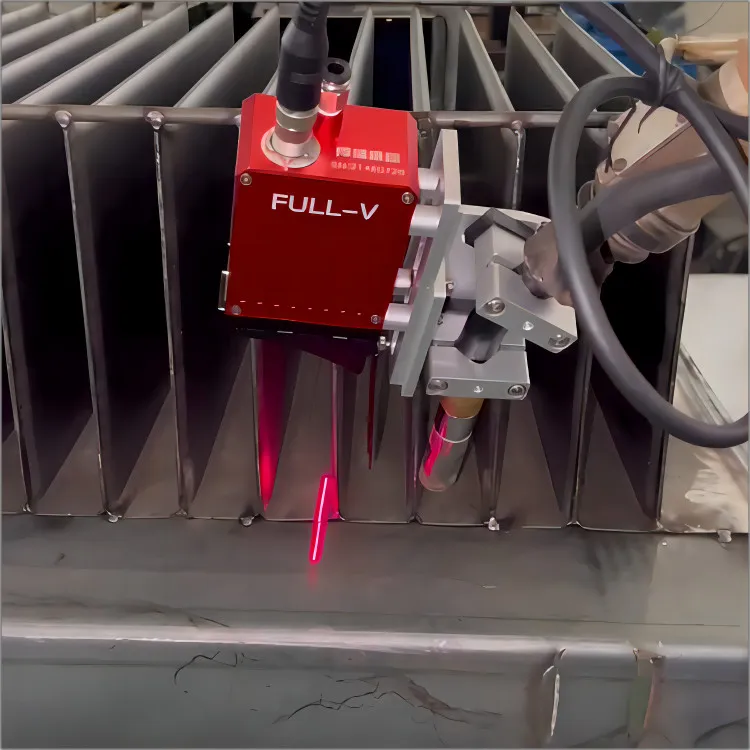

Special Software and Switches for Panel-Type Radiators for Transformers Welding
To ensure the quality and efficiency of the round hole plug welding process, we offer Special Software for Panel-type Radiators for Transformers Welding. This software is designed to optimize the welding parameters and to control the welding process, ensuring that the welds meet the required quality standards. It also provides real-time monitoring and feedback, allowing operators to make adjustments as needed to ensure the best possible results.
In addition to the software, we also offer Special Switch for Panel-type Radiators for Transformers Welding. These switches are specifically designed for use in panel-type radiators for transformers welding and are engineered to provide a reliable and efficient electrical connection. They are made from high-quality materials and are designed to withstand the harsh operating conditions typically encountered in this application.
Conclusion
In conclusion, round hole plug welding is a critical process in the manufacturing of private switches, especially in applications where a reliable electrical connection is required. The process involves several steps, including preparation, fixturing, welding, inspection, and post-welding treatment. By following these steps and using the appropriate welding methods and equipment, we can ensure that the welds meet the required quality standards and provide a strong and durable joint.
If you are in the market for Round Hole Plug Welding Private Switch, we invite you to contact us to discuss your specific requirements. Our team of experts is available to provide you with detailed information and to assist you in selecting the right products for your application. We are committed to providing high-quality products and excellent customer service, and we look forward to working with you.
References
- Welding Handbook, American Welding Society
- Fundamentals of Welding Processes, John Wiley & Sons
- Electrical Engineering Handbook, CRC Press