

In the realm of modern manufacturing, seam tracking sensors play a pivotal role in ensuring the precision and quality of welding and other joining processes. As a leading supplier of seam tracking sensors, we are often asked about the availability of wireless seam tracking sensors. In this blog post, we will explore the current state of wireless seam tracking sensors, their benefits, limitations, and the specific products we offer in this domain.
The Need for Wireless Seam Tracking Sensors
Traditional seam tracking sensors are typically connected to the control system via cables. While these wired sensors have served the industry well for many years, they come with certain limitations. Cables can be cumbersome, especially in dynamic manufacturing environments where robots or other moving equipment are involved. They can get tangled, damaged, or limit the range of motion of the equipment. Additionally, installing and maintaining cables can be time - consuming and costly.
Wireless seam tracking sensors address these issues by eliminating the need for physical cables. They offer greater flexibility in terms of installation and operation. Manufacturers can easily reposition the sensors without having to worry about cable management. This is particularly beneficial in applications where the welding or joining process occurs in hard - to - reach areas or where the equipment needs to move freely.
Current Availability of Wireless Seam Tracking Sensors
The good news is that there are indeed wireless seam tracking sensors available in the market. Technological advancements in wireless communication, such as Wi - Fi, Bluetooth, and ZigBee, have made it possible to develop reliable wireless sensor systems. These sensors can transmit data in real - time to the control system, allowing for accurate seam tracking and adjustment during the welding process.
At our company, we offer a range of wireless seam tracking sensors that are designed to meet the diverse needs of our customers. Our sensors are equipped with state - of - the - art wireless technology, ensuring stable and secure data transmission. They are also highly accurate, capable of detecting even the slightest deviations in the seam position.
Benefits of Our Wireless Seam Tracking Sensors
1. Flexibility
As mentioned earlier, the absence of cables provides unparalleled flexibility. Our wireless sensors can be easily installed on robots, gantries, or other moving equipment. They can be moved and repositioned as needed, allowing for quick adaptation to different manufacturing setups.
2. Reduced Installation Time
Installing a wireless sensor is much faster than installing a wired one. There is no need to run cables through the factory floor, which can save a significant amount of time and labor costs. This also means that new production lines can be set up more quickly, reducing the time to market for new products.
3. Improved Safety
Cables can pose a tripping hazard in the factory environment. By eliminating cables, our wireless sensors contribute to a safer workplace. There is also less risk of cable damage, which can lead to system failures and costly downtime.
4. Real - Time Monitoring
Our wireless sensors are capable of transmitting data in real - time to the control system. This allows operators to monitor the seam tracking process closely and make immediate adjustments if necessary. Real - time monitoring also enables predictive maintenance, as any potential issues with the sensor can be detected early.
Our Product Offerings
We have two popular models of wireless seam tracking sensors that are well - suited for a variety of applications:
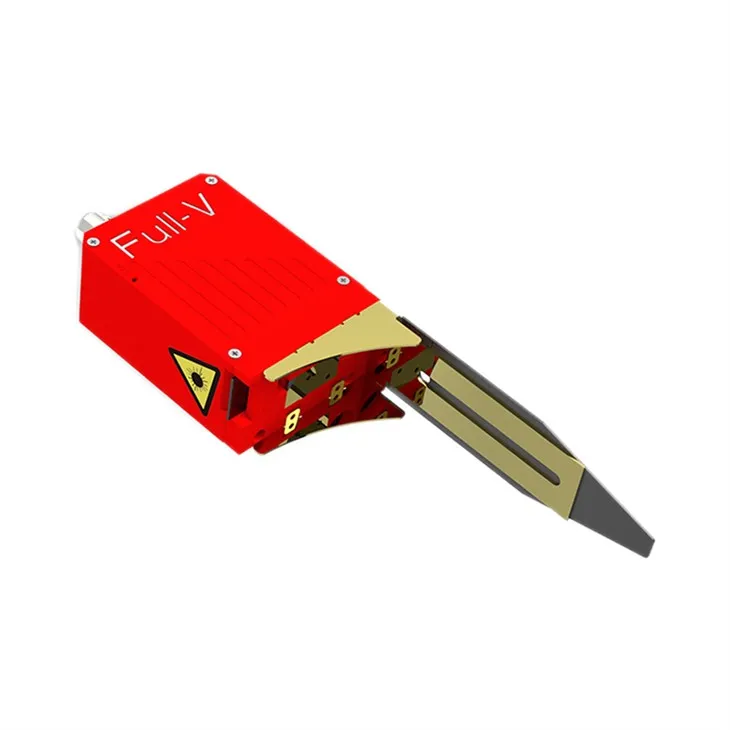
- Butt Series Laser Weld Tracking Sensor FV - 150 - ZO - TD: This sensor is designed for thin - butt welding applications. It offers high - precision seam tracking, with a resolution that can detect even the smallest gaps. The wireless communication ensures that data is transmitted quickly and accurately, allowing for seamless integration with the control system.
- Butt Series Laser Weld Tracking Sensor FV - 210 - ZO - TD: This model is suitable for more demanding welding tasks. It has a wider detection range and enhanced sensitivity, making it ideal for applications where the seam position may vary more significantly. The wireless functionality provides the same benefits of flexibility and real - time data transmission as the FV - 150 model.
Limitations of Wireless Seam Tracking Sensors
While wireless seam tracking sensors offer many advantages, they also have some limitations. One of the main concerns is the potential for interference. Wireless signals can be affected by other electronic devices in the factory environment, such as motors, generators, and other wireless systems. This can lead to data loss or inaccurate readings.
To mitigate this issue, our sensors are equipped with advanced anti - interference technology. They use frequency hopping and other techniques to ensure reliable communication even in a noisy environment. Additionally, we provide detailed installation guidelines to help customers minimize the risk of interference.
Another limitation is the limited range of wireless communication. Depending on the type of wireless technology used, the sensors may have a maximum range beyond which the signal strength deteriorates. However, our sensors are designed to have a sufficient range for most industrial applications. In cases where a longer range is required, we can provide repeaters or other solutions to extend the coverage.

Conclusion
In conclusion, wireless seam tracking sensors are a viable option for modern manufacturing. They offer numerous benefits in terms of flexibility, installation time, safety, and real - time monitoring. At our company, we are committed to providing high - quality wireless seam tracking sensors that meet the needs of our customers. Our Butt Series Laser Weld Tracking Sensor FV - 150 - ZO - TD and Butt Series Laser Weld Tracking Sensor FV - 210 - ZO - TD are excellent choices for a wide range of welding applications.
If you are interested in improving the efficiency and quality of your welding processes, we invite you to contact us for more information. Our team of experts is ready to help you choose the right wireless seam tracking sensor for your specific needs and to assist you with the procurement and installation process.
References
- "Industrial Wireless Sensor Networks: Challenges, Design Principles, and Technical Approaches" by S. Akyildiz, T. Melodia, and K. Chowdhury.
- "Welding Handbook, Volume 1: Welding Science and Technology" published by the American Welding Society.