

Can a weld tracking sensor be used in precision welding? You bet! As a supplier of weld tracking sensors, I've seen firsthand how these nifty tools can revolutionize the precision welding process. So, let's dive into this topic and explore why weld tracking sensors are a game-changer in the world of precision welding.
First off, what exactly is precision welding? Precision welding is all about creating high - quality welds with extreme accuracy, whether it's for small - scale, delicate components in the electronics industry or large - scale, high - integrity structures in the aerospace or automotive sectors. In precision welding, even the slightest error can lead to costly failures, making it crucial to have a reliable welding process.
Now, let's talk about weld tracking sensors. These sensors are designed to monitor and adjust the welding torch's position in real - time. They work by detecting the joint position, tracking the weld seam, and making sure that the welding operation stays on track. There are different types of weld tracking sensors, such as laser - based sensors, contact sensors, and vision sensors. Each type has its own pros and cons, but they all share the common goal of improving the accuracy of the welding process.
One of the main benefits of using a weld tracking sensor in precision welding is the increased accuracy. In precision applications, the tolerances are extremely tight. A weld tracking sensor can detect even the smallest deviations in the joint position and adjust the torch accordingly. This means that you can achieve a more consistent and precise weld bead, reducing the chances of defects such as porosity, undercut, and lack of fusion.
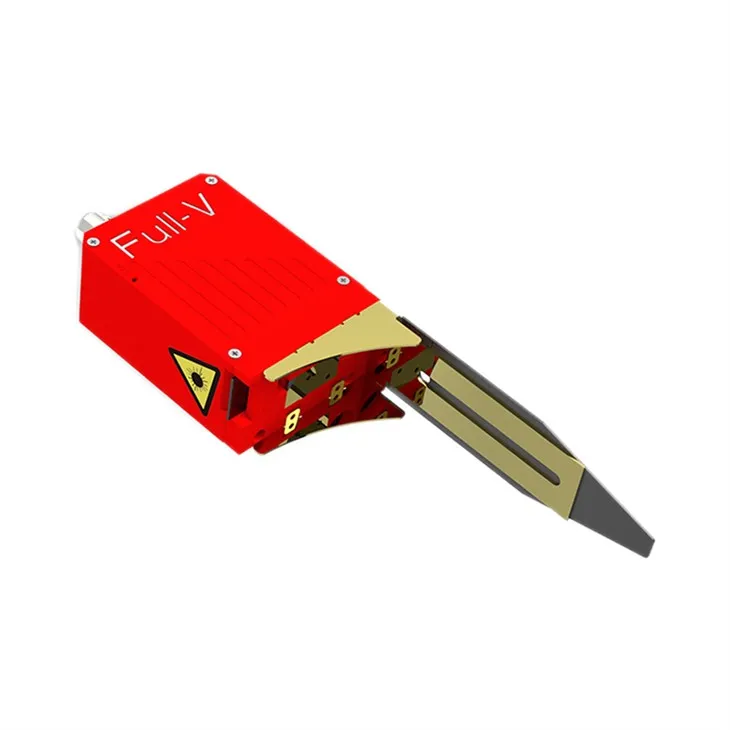
For example, in the production of medical devices, where precision is of the utmost importance, a weld tracking sensor can ensure that the welds are made exactly where they need to be. The Butt Series Laser Weld Tracking Sensor FV - 210 - ZO - TD is an excellent option for these types of applications. It uses advanced laser technology to accurately detect the weld seam and provides precise position feedback to the welding system.
Another advantage is the improvement in productivity. Manual welding in precision applications can be a slow and labor - intensive process. Welders have to constantly monitor the joint and make adjustments by hand, which is not only time - consuming but also prone to human error. With a weld tracking sensor, the welding process can be automated to a large extent. The sensor takes care of the seam tracking, allowing the welder to focus on other aspects of the operation or enabling unmanned welding cells to operate efficiently.
Take the automotive industry as an example. In car manufacturing, there are numerous precision welding tasks, such as welding the body panels together. By using a Butt Series Laser Weld Tracking Sensor FV - 150 - ZO - TD, the welding process becomes faster and more consistent. The sensor can quickly adapt to any variations in the joint geometry, ensuring that each weld is of high quality, and speeding up the overall production line.
Weld tracking sensors also offer better repeatability. In precision welding, it's essential to be able to reproduce the same high - quality welds every time. A manual welding process can vary from one weld to another due to factors like the welder's fatigue or inconsistencies in their technique. A weld tracking sensor, on the other hand, follows a pre - programmed path and makes corrections based on real - time data. This means that you can expect the same level of quality and accuracy for every single weld, which is especially important for mass - production applications.
However, it's not all sunshine and rainbows. There are some challenges when using weld tracking sensors in precision welding. One of the main issues is the complexity of the sensor setup. These sensors need to be properly calibrated and integrated with the welding system. If not set up correctly, they may not provide accurate results, and it can take some time and expertise to get everything up and running smoothly.
Another challenge is the cost. Weld tracking sensors can be relatively expensive, especially the high - end models with advanced features. For small - scale manufacturers or those with a tight budget, the initial investment may seem prohibitive. But it's important to consider the long - term benefits, such as the reduction in waste, the improvement in quality, and the increase in productivity, which can ultimately lead to significant cost savings.
In addition, environmental factors can also affect the performance of the sensors. For example, in a workshop with a lot of dust, smoke, or high levels of electromagnetic interference, the sensor's accuracy may be compromised. It's important to take the necessary precautions, such as using protective enclosures or filtering systems, to ensure the reliable operation of the sensor.

Despite these challenges, the advantages of using weld tracking sensors in precision welding far outweigh the disadvantages. As technology continues to evolve, the cost of these sensors is likely to come down, and they will become even more user - friendly and reliable.
If you're involved in precision welding and are looking to improve the quality, productivity, and repeatability of your welding process, a weld tracking sensor could be the solution you've been waiting for. Our company offers a wide range of high - quality weld tracking sensors, including the Butt Series Laser Weld Tracking Sensor FV - 210 - ZO - TD and the Butt Series Laser Weld Tracking Sensor FV - 150 - ZO - TD. We're here to help you find the right sensor for your specific needs. If you're interested in learning more or discussing a potential purchase, don't hesitate to reach out. Let's have a chat about how we can take your precision welding to the next level.
References
- Rickenbach, G. (2019). Welding Automation: Systems, Sensors, and Controls for the New Millennium. Industrial Press Inc.
- Dong, P., & Yuan, J. (Eds.). (2016). Intelligent Sensors for Welding Processes. Springer.