

Yo! As a supplier of the Thin Butt Series Laser Weld Tracking Sensor, I've gotten tons of questions about how these bad boys perform at different welding frequencies. So, I'm gonna break it down for you right here.
First off, let's talk about what makes our Thin Butt Series Laser Weld Tracking Sensor so special. These sensors are designed to be super accurate and reliable, no matter what kind of welding job you're dealing with. They use advanced laser technology to track the weld seam in real - time, which helps to ensure a high - quality weld every time.
Low Welding Frequencies
When it comes to low welding frequencies, usually below 10 Hz, the Thin Butt Series Laser Weld Tracking Sensor really shines. At these frequencies, the welding process is relatively slow. This gives the sensor plenty of time to analyze the weld seam and make any necessary adjustments.
For example, the Butt Series Laser Weld Tracking Sensor FV - 210 - ZO - TD can detect even the slightest irregularities in the weld seam at low frequencies. It has a high - resolution laser that can pick up on small gaps or misalignments. This is crucial because in low - frequency welding, precision is key. You don't want to waste time and materials on a bad weld.
The sensor's response time is also well - suited for low frequencies. It can quickly adapt to changes in the weld seam, ensuring that the welding torch stays on track. This results in a smooth and consistent weld bead, which is exactly what you want in applications like heavy - duty machinery manufacturing or large - scale structural welding.

Medium Welding Frequencies
Medium welding frequencies, typically in the range of 10 Hz to 50 Hz, present a bit of a different challenge. The welding process is faster than at low frequencies, so the sensor needs to work a bit harder.
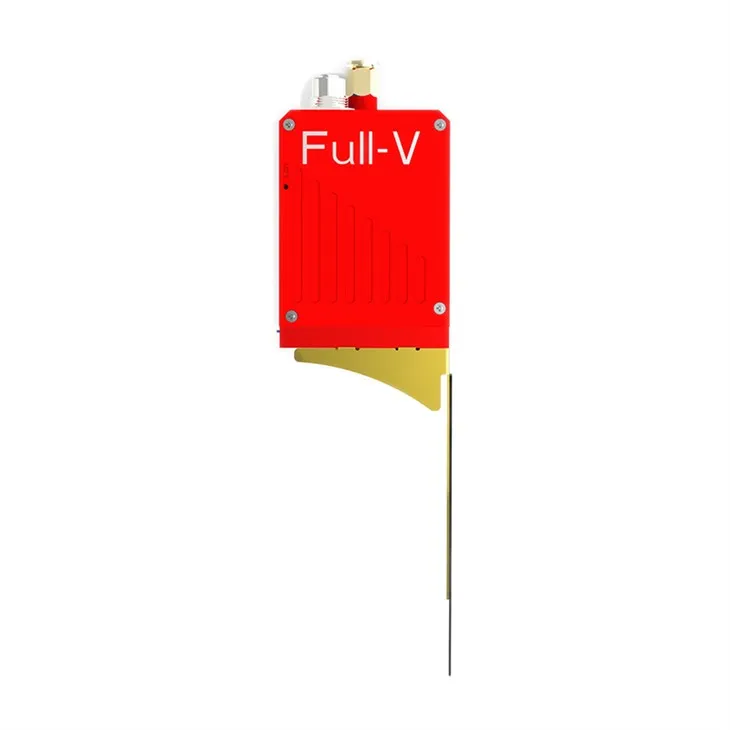
Our Butt Series Laser Weld Tracking Sensor FV - 150 - ZO - TD is a great option for medium - frequency welding. It has a fast - sampling rate, which allows it to keep up with the quicker pace of the weld. Even as the welding speed increases, the sensor can still accurately track the weld seam.
One of the things that helps the sensor perform well at medium frequencies is its intelligent algorithm. This algorithm filters out any noise or interference that might be present in the welding environment. So, even if there are some minor vibrations or electrical disturbances, the sensor can still provide accurate data to the welding system.
In medium - frequency welding, the sensor's ability to maintain a stable tracking is essential. This helps to reduce the number of weld defects, such as porosity or lack of fusion. Whether you're working on automotive parts or small - to - medium - sized metal structures, the Thin Butt Series sensors can handle the job.
High Welding Frequencies
High welding frequencies, above 50 Hz, are where things get really challenging. The welding process is extremely fast, and there's very little time for the sensor to make adjustments.
But don't worry, our Thin Butt Series sensors are up to the task. They have been engineered with high - speed processing capabilities. The laser technology used in these sensors can capture data at a rapid rate, allowing them to keep up with the high - speed welding.
At high frequencies, the sensor's ability to process data in real - time is crucial. It can quickly analyze the weld seam and send signals to the welding system to make any necessary corrections. This helps to ensure that the weld quality remains high, even at breakneck speeds.
However, it's important to note that at high frequencies, the welding environment can be more harsh. There may be more heat, more spatter, and more electromagnetic interference. Our sensors are designed to be rugged and resistant to these conditions. They have protective coatings and shielding to prevent damage and ensure reliable operation.
Real - World Applications
Let's take a look at some real - world applications to see how the Thin Butt Series Laser Weld Tracking Sensor performs at different frequencies.
In the aerospace industry, low - frequency welding is often used for critical components. The high level of precision required means that the sensor needs to be able to detect even the smallest imperfections. Our sensors have been used in the welding of aircraft frames and engine parts, where a single weld defect could have catastrophic consequences.
For the automotive industry, medium - frequency welding is common. The sensors are used in the welding of car bodies and chassis. They help to ensure that the welds are strong and consistent, which is essential for the safety and durability of the vehicle.
In the electronics industry, high - frequency welding is often employed for small - scale components. The sensors can keep up with the fast - paced welding process, ensuring that the delicate electronic parts are welded accurately without any damage.
Conclusion
So, there you have it. The Thin Butt Series Laser Weld Tracking Sensor performs exceptionally well at different welding frequencies. Whether you're dealing with low - frequency precision work, medium - frequency production - line welding, or high - frequency high - speed applications, our sensors have got you covered.
If you're in the market for a reliable laser weld tracking sensor, I highly recommend checking out our Thin Butt Series. They offer the accuracy, speed, and durability you need to get the job done right.
If you're interested in learning more or making a purchase, feel free to reach out. We're always happy to have a chat and discuss how our sensors can fit into your welding operations.
References
- Welding Handbook, American Welding Society
- Laser Technology in Welding Applications, International Journal of Welding Research