

As a supplier of Round Hole Plug Welding Private Switches, I've seen firsthand the challenges that come with round hole plug welding, especially the pesky issue of under - welding. It can be a real headache for manufacturers and can lead to a lot of wasted time and materials if not properly addressed. In this blog, I'll share some tips on how to avoid under - welding in round hole plug welding of a private switch.
Understanding Under - welding
First things first, let's talk about what under - welding is. Under - welding occurs when the weld doesn't penetrate deep enough into the base material or when there isn't enough fusion between the filler metal and the base metal. In the case of round hole plug welding for private switches, this can lead to weak joints that may fail under stress, which is a big no - no in the electrical industry.
Factors Leading to Under - welding
1. Incorrect Welding Parameters
One of the most common causes of under - welding is using the wrong welding parameters. This includes things like welding current, voltage, and travel speed. If the current is too low, the heat generated may not be sufficient to melt the base metal and the filler material properly. Similarly, if the voltage is off or the travel speed is too fast, the weld won't have enough time to penetrate and fuse correctly.

2. Poor Surface Preparation
The surface of the parts being welded needs to be clean and free of contaminants like grease, oil, rust, and dirt. If these are present, they can act as barriers to the welding process, preventing proper fusion and leading to under - welding.
3. Inadequate Filler Material
Using the wrong type or amount of filler material can also cause under - welding. If the filler material doesn't match the base metal in terms of composition, it may not fuse properly. And if not enough filler material is used, there won't be enough to create a strong, well - fused weld.
Tips to Avoid Under - welding
1. Optimize Welding Parameters
Finding the right welding parameters is crucial. You need to experiment a bit to figure out the optimal current, voltage, and travel speed for your specific round hole plug welding of private switches. For example, start by setting the current at a medium level and gradually increase or decrease it based on the appearance and quality of the weld. If the weld looks too cold and doesn't seem to be penetrating well, increase the current. If it's burning through or causing excessive spatter, lower it.
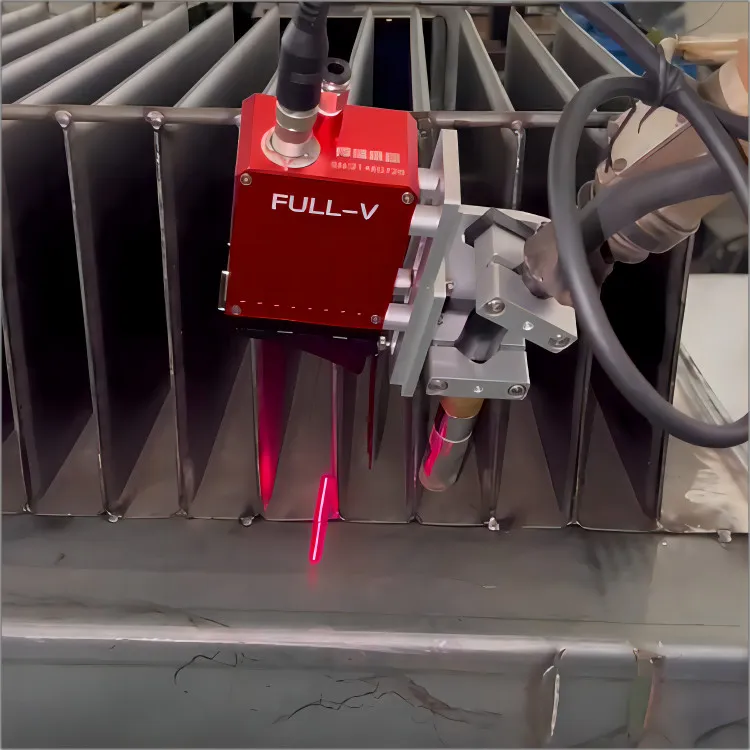
You can also use advanced tools like the Laser Weld Tracking Sensor for Panel - type Radiators for Transformers Welding. This sensor can help you maintain a consistent welding speed and distance, which in turn can improve the quality of the weld and reduce the risk of under - welding.
2. Proper Surface Preparation
Before you start welding, make sure to clean the surfaces of the parts thoroughly. You can use solvents to remove grease and oil, and wire brushes or sandpaper to remove rust and dirt. A clean surface will allow the filler material to bond better with the base metal, reducing the chances of under - welding.
3. Select the Right Filler Material
Choose a filler material that is compatible with the base metal of your private switch. Consult the manufacturer's recommendations or do some testing to find the best match. Also, make sure to use the right amount of filler material. You don't want to use too little, but you also don't want to overdo it as that can lead to other problems like excessive buildup or porosity.
4. Training and Skill Development
Your welding operators play a huge role in preventing under - welding. Make sure they are properly trained and have the necessary skills to perform round hole plug welding on private switches. Provide them with regular training sessions to keep their skills up - to - date and to teach them about the latest techniques and best practices.
5. Use Special Software
There is Special Software for Panel - type Radiators for Transformers Welding available that can help optimize the welding process. This software can analyze the welding parameters in real - time and make adjustments as needed to ensure a high - quality weld. It can also provide valuable data and feedback that can be used to improve the overall welding process.
Quality Control and Inspection
Even if you follow all these tips, it's still important to have a good quality control and inspection process in place. Regularly inspect the welded private switches to check for signs of under - welding. You can use non - destructive testing methods like ultrasonic testing or X - ray inspection to detect any internal defects. If you find any issues, take corrective action immediately to prevent further problems.
Conclusion
Avoiding under - welding in round hole plug welding of a private switch requires a combination of proper parameter settings, good surface preparation, the right filler material, skilled operators, and effective quality control. By following these tips and using advanced tools and software, you can significantly reduce the risk of under - welding and produce high - quality private switches.
If you're in the market for Round Hole Plug Welding Private Switch, we're here to help. Our products are manufactured using the latest techniques and quality control measures to ensure reliable performance. Don't hesitate to reach out to us for a purchase negotiation. We look forward to working with you!
References
- Welding Handbook, American Welding Society
- Practical Welding Engineering, Carole A. L. Battersby