

In the realm of welding technology, seam tracking sensors play a pivotal role in ensuring the precision and quality of welds. As a seasoned supplier of seam tracking sensors, I've witnessed firsthand how the right installation position of these sensors can significantly impact the welding process. In this blog post, I'll delve into the various installation positions for seam tracking sensors in a welding setup and discuss their advantages and considerations.
Front - Mounted Installation
One of the most common installation positions for seam tracking sensors is in front of the welding torch. When a sensor is front - mounted, it has the advantage of detecting the seam ahead of the actual welding operation. This allows for proactive adjustments to be made to the welding path.
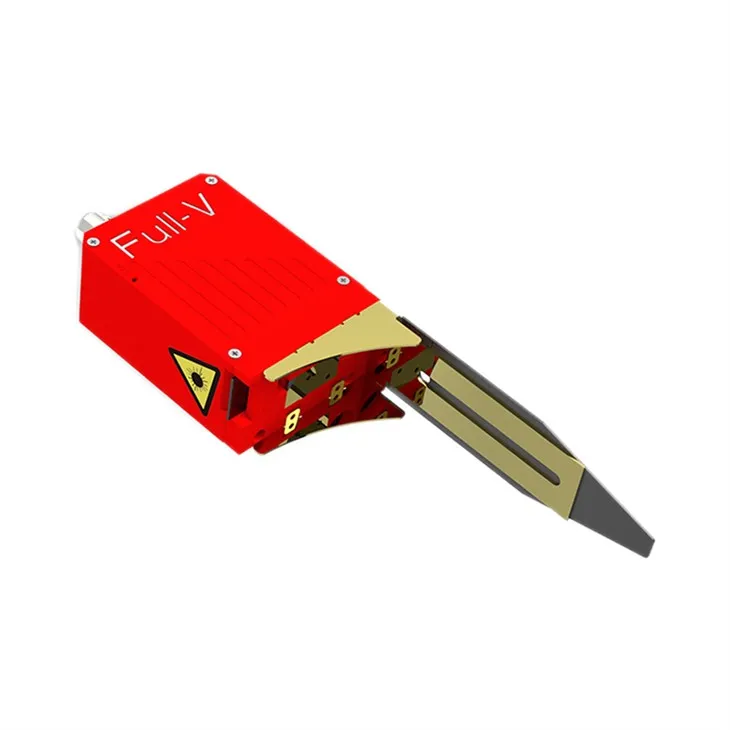
For example, our Butt Series Laser Weld Tracking Sensor FV - 150 - ZO - TD can be effectively installed in front of the torch. By doing so, it can accurately identify the seam's position, width, and any irregularities. This early detection enables the welding system to correct the torch's trajectory in real - time, reducing the chances of weld defects such as misalignment or inconsistent bead width.
However, front - mounted installation also has its challenges. The sensor is more exposed to the heat and spatter generated during the welding process. This can potentially damage the sensor over time, reducing its lifespan. To mitigate this risk, proper shielding and cooling mechanisms need to be implemented. Additionally, the sensor's field of view must be carefully adjusted to avoid interference from the torch or other components in the welding setup.
Side - Mounted Installation
Side - mounted seam tracking sensors are another popular option. In this configuration, the sensor is placed beside the welding torch. This position provides a different perspective of the seam, which can be beneficial in certain welding applications.
Our Butt Series Laser Weld Tracking Sensor FV - 210 - ZO - TD can be effectively utilized in a side - mounted setup. Side - mounting allows the sensor to detect the seam's lateral position and any variations in the joint gap. This is particularly useful in applications where the seam has a complex geometry or when welding thin materials, as it can help maintain a consistent weld bead along the side of the joint.
One of the advantages of side - mounted sensors is that they are less exposed to the direct heat and spatter from the welding arc compared to front - mounted sensors. However, side - mounting requires careful alignment to ensure that the sensor can accurately measure the seam. Any misalignment can lead to inaccurate readings and, consequently, poor weld quality. Also, the side - mounted sensor may have a limited view of the seam, especially in deep or narrow joints.
Rear - Mounted Installation
Rear - mounted installation involves placing the seam tracking sensor behind the welding torch. While less common than front - or side - mounted positions, rear - mounted sensors can still serve a valuable purpose.
A rear - mounted sensor can be used to verify the quality of the weld that has just been completed. It can detect any post - weld defects such as undercutting, porosity, or uneven bead formation. By providing this feedback, the welding system can make adjustments for subsequent welds, improving the overall quality of the welding process.
However, rear - mounted sensors have limitations. They cannot provide real - time guidance for the current weld, as they are installed behind the torch. Also, they may be affected by the heat and fumes from the freshly welded seam, which can interfere with the sensor's operation.

Overhead Installation
In some welding setups, overhead installation of seam tracking sensors is employed. This position is often used in applications where the welding is performed on large, flat surfaces or in automated welding cells.
An overhead - mounted sensor can provide a bird's - eye view of the seam, allowing for comprehensive detection of the seam's position and shape. It can cover a large area, making it suitable for long welds or when multiple seams need to be tracked simultaneously.
However, overhead installation requires a stable mounting structure to ensure the sensor's accuracy. The sensor is also more vulnerable to dust and debris falling from above, which can affect its performance. Regular maintenance and cleaning are essential to keep the sensor functioning properly.
Considerations for Installation
When choosing the installation position for a seam tracking sensor, several factors need to be considered.
- Welding Process: Different welding processes, such as MIG, TIG, or laser welding, generate different levels of heat, spatter, and fumes. The installation position should be selected to minimize the sensor's exposure to these elements.
- Seam Geometry: The shape and complexity of the seam play a crucial role in determining the optimal installation position. For example, a complex, curved seam may require a front - or side - mounted sensor for accurate tracking, while a straight, simple seam may be suitable for an overhead - mounted sensor.
- Welding Environment: The environment in which the welding is taking place, including factors such as temperature, humidity, and dust levels, can affect the sensor's performance. The installation position should be chosen to protect the sensor from these environmental factors.
- System Compatibility: The sensor must be compatible with the existing welding system, including the torch, robot, and control unit. The installation position should allow for easy integration and communication between the sensor and the other components of the system.
Conclusion
In conclusion, the installation position of seam tracking sensors in a welding setup is a critical factor that can significantly impact the quality and efficiency of the welding process. Each installation position has its own advantages and challenges, and the choice should be based on the specific requirements of the welding application.
As a supplier of high - quality seam tracking sensors, we are committed to providing our customers with the best solutions for their welding needs. Whether you need a front - mounted, side - mounted, rear - mounted, or overhead - mounted sensor, we have the expertise and products to meet your requirements.
If you are interested in learning more about our seam tracking sensors or discussing the optimal installation position for your welding setup, we encourage you to contact us for a detailed consultation. Our team of experts is ready to assist you in selecting the right sensor and installation configuration to achieve the best welding results.
References
- Welding Handbook, American Welding Society
- Seam Tracking Technology in Modern Welding, Journal of Welding Research
- Application of Laser Seam Tracking Sensors in Industrial Welding, International Journal of Advanced Manufacturing Technology