

Hey there! As a supplier of Round Hole Welding Solutions And Products, I've seen firsthand how the welding angle can really mess with the quality of round hole welding. So, let's dig into what kind of influence it has.
Basics of Round Hole Welding
Before we get into the welding angle, let's quickly talk about round hole welding. It's a process where we fill round holes in a workpiece with molten metal to join parts or repair holes. This kind of welding is super important in industries like automotive, aerospace, and manufacturing. You need a stable and strong weld to make sure the parts work well and last a long time.
The Role of Welding Angle
The welding angle is basically the angle between the welding torch and the workpiece. It might seem like a small thing, but it can have a huge impact on the welding quality. There are a few key ways it can affect the process.
Penetration
One of the most important things in welding is penetration. That's how deep the molten metal goes into the workpiece. If the welding angle is too steep, the arc might be concentrated on the surface of the hole, and the penetration won't be deep enough. This can lead to a weak weld that might break easily. On the other hand, if the angle is too shallow, the molten metal might flow out of the hole before it has a chance to properly penetrate, also resulting in a poor - quality weld.
For example, in some automotive parts where round hole welding is used to join different components, insufficient penetration can cause the parts to come loose over time, which is a big safety risk.
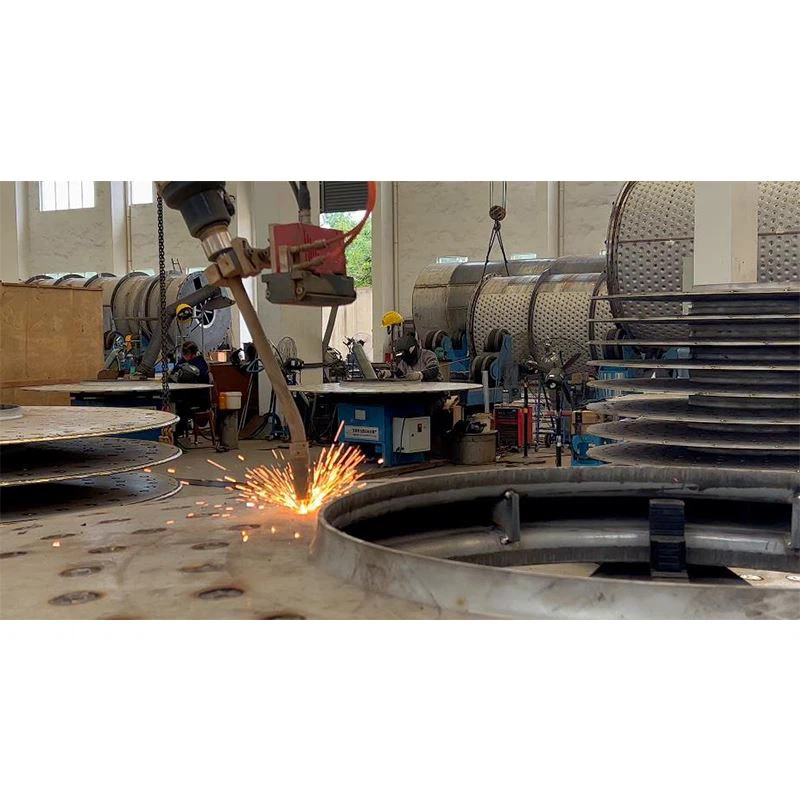

Weld Pool Shape
The welding angle also affects the shape of the weld pool. A proper welding angle helps to create a well - formed, symmetrical weld pool inside the round hole. When the angle is off, the weld pool can become uneven. It might be wider on one side and narrower on the other, or it could have an irregular shape.
An uneven weld pool can lead to problems like porosity and lack of fusion. Porosity means there are tiny holes in the weld, which weaken it. Lack of fusion occurs when the molten metal doesn't properly bond with the base metal, and this can cause the weld to fail under stress.
Spatter
Spatter is the molten metal that flies out of the weld pool during the welding process. The welding angle can influence how much spatter is produced. If the angle is incorrect, more spatter is likely to be generated. Too much spatter can not only make the welding area messy but also cause defects in the weld.
For instance, spatter can land on the surface of the workpiece and create small bumps or rough areas. These can be a problem if the part needs to have a smooth finish, like in some aerospace applications where aerodynamics are crucial.
Ideal Welding Angles for Round Hole Welding
So, what are the ideal welding angles? Well, it depends on a few factors like the type of welding process, the size of the round hole, and the material being welded.
Gas Metal Arc Welding (GMAW)
In GMAW, which is a common welding process for round hole welding, a good starting point is to have the welding torch at an angle of around 10 - 15 degrees from the vertical axis of the round hole. This angle helps to ensure proper penetration and a well - formed weld pool.
However, if the hole is relatively large, you might need to adjust the angle slightly. A larger hole might require a steeper angle to get the molten metal to reach the bottom of the hole and achieve sufficient penetration.
Gas Tungsten Arc Welding (GTAW)
For GTAW, the ideal angle is often a bit different. Usually, the torch is held at an angle of about 15 - 20 degrees from the vertical. This process is more precise, and the angle helps to control the heat input and the flow of the molten metal in the round hole.
Using Our Special Products to Control Welding Angle
At our company, we offer some great products that can help you control the welding angle and improve the quality of round hole welding.
First up, we have the Special Software for Round Hole Plug Welding. This software can provide real - time feedback on the welding angle. It can analyze the position of the welding torch and tell you if the angle is correct or needs adjustment. It also has features that can optimize the welding process based on the angle and other parameters, ensuring a high - quality weld every time.
Then, there's the Round Hole Plug Welding Special Industrial Computer. This computer is specifically designed for round hole welding applications. It can be connected to the welding equipment and monitor the welding angle. It has a user - friendly interface that allows you to easily set the desired angle and make adjustments during the welding process.
And let's not forget the Laser Welding Seam Tracking Sensor for Round Hole Plug Welding. This sensor can accurately detect the position of the round hole and the welding torch. It can then adjust the torch's position to maintain the correct welding angle. It's especially useful in automated welding systems where precision is key.
Case Studies
Let's take a look at a couple of case studies to see how the welding angle and our products have made a difference.
Case Study 1: Automotive Manufacturing
A car manufacturing company was having problems with the quality of round hole welds in their engine components. The welds were showing signs of insufficient penetration and porosity. After analyzing the welding process, it was found that the welding angle was inconsistent.
We provided them with our Special Software for Round Hole Plug Welding and the Round Hole Plug Welding Special Industrial Computer. With these products, they were able to precisely control the welding angle. As a result, the penetration improved, and the porosity was significantly reduced. The quality of the engine components increased, and they were able to reduce the number of defective parts.
Case Study 2: Aerospace Industry
An aerospace company was using round hole welding to join parts of an aircraft wing. They were facing issues with spatter and uneven weld pool shapes. Our Laser Welding Seam Tracking Sensor for Round Hole Plug Welding was installed in their welding system.
The sensor was able to detect the correct welding angle and adjust the torch position in real - time. This led to a significant reduction in spatter and a more uniform weld pool shape. The quality of the welds improved, and the parts met the strict aerospace standards.
Conclusion
In conclusion, the welding angle plays a crucial role in the quality of round hole welding. It affects penetration, weld pool shape, and spatter. By using the right welding angle and our specialized products, you can greatly improve the quality of your round hole welds.
If you're in the business of round hole welding and want to take your welding quality to the next level, don't hesitate to get in touch with us. We're here to provide you with the best solutions and products for round hole welding. Whether you're in the automotive, aerospace, or any other industry, we can help you achieve better results.
References
- AWS Welding Handbook, American Welding Society
- Welding Technology, a textbook on welding processes and principles
- Industry reports on round hole welding quality improvement