

Hey there! I'm from Round Hole Welding Solutions And Products, and today I want to dig into a super important question in our industry: What is the minimum thickness of materials that can be welded using round hole welding?
First off, let's understand what round hole welding is. It's a specialized welding technique where we create welds through round holes in one material to join it with another. This method is widely used in various industries, like automotive, aerospace, and manufacturing, because it offers strong and reliable joints.
Now, the minimum thickness of materials that can be welded using round hole welding isn't a one - size - fits - all answer. It depends on several factors.
Factors Affecting the Minimum Weldable Thickness
Welding Method
There are different ways to perform round hole welding, such as laser welding, resistance welding, and arc welding. Each method has its own capabilities when it comes to thin materials.
Laser welding is pretty amazing. It can handle really thin materials because it produces a highly concentrated heat source. The focused laser beam can quickly melt the material, allowing for precise and clean welds. With laser welding, we've seen successful welds on materials as thin as 0.1 mm. That's super thin! The key here is that the laser can be controlled very accurately, minimizing the heat - affected zone and reducing the risk of warping or burning the thin material. You can learn more about our laser welding capabilities with our Laser Welding Seam Tracking Sensor for Round Hole Plug Welding. This sensor helps ensure that the laser is precisely targeted, even when dealing with thin materials.
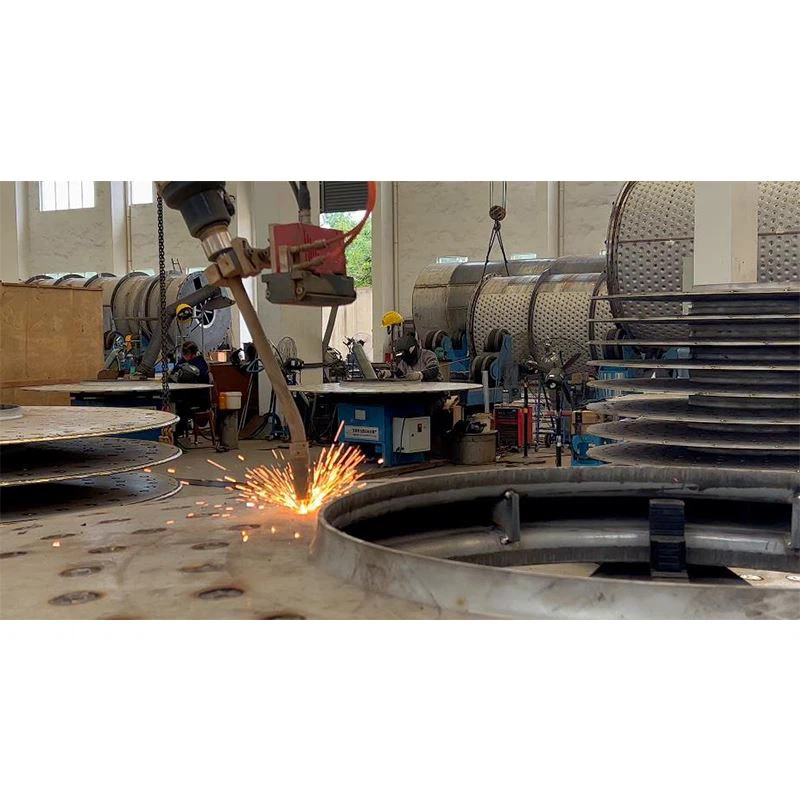

Resistance welding, on the other hand, relies on the electrical resistance of the materials to generate heat. For thin materials, it can be a bit tricky because if the current is too high, it can blow through the material. But with proper control and the right equipment, we can still achieve good welds on materials around 0.2 - 0.3 mm thick. The advantage of resistance welding is that it's relatively fast and can be automated easily, which is great for high - volume production.
Arc welding is a more traditional method. It uses an electric arc to melt the material. Due to the broader heat distribution, it's generally better suited for slightly thicker materials. The minimum thickness for arc welding in round hole applications is usually around 0.5 mm. If the material is thinner than that, it's more likely to be damaged by the intense heat of the arc.
Material Properties
The type of material also plays a huge role in determining the minimum weldable thickness. Different materials have different melting points, thermal conductivities, and mechanical properties.
For example, aluminum is a lightweight and widely used metal. It has a relatively low melting point, which means it can be welded at lower temperatures. However, it also has high thermal conductivity, which can cause the heat to spread quickly. This makes it a bit challenging to weld thin aluminum sheets. But with the right techniques, we can weld aluminum as thin as 0.2 mm using laser welding.
Stainless steel, on the other hand, has a higher melting point and lower thermal conductivity compared to aluminum. It can withstand more heat without getting damaged. We can typically weld stainless steel as thin as 0.15 mm with laser welding and around 0.3 mm with resistance welding.
Joint Design
The design of the round hole and the joint itself affects the minimum weldable thickness. A well - designed joint can help distribute the heat and stress more evenly, allowing for successful welds on thinner materials.
If the round hole is too large for a thin material, it can cause the material to deform or even tear during the welding process. On the other hand, if the hole is too small, it may not allow enough material to flow and form a proper weld. We've developed Special Software for Round Hole Plug Welding that can help optimize the joint design based on the material thickness and other factors. This software takes into account all the variables and provides recommendations for the best hole size, shape, and welding parameters.
Our Solutions for Thin - Material Welding
At Round Hole Welding Solutions And Products, we've invested a lot in research and development to be able to handle thin - material welding. We use state - of - the - art equipment, like our Round Hole Plug Welding Special Industrial Computer. This computer is specifically designed to control the welding process, adjusting the parameters in real - time based on the material thickness and other factors.
We also have a team of experienced engineers who can work with you to develop custom welding solutions. Whether you're working with ultra - thin aluminum for a lightweight aerospace application or thin stainless steel for a medical device, we can find the right approach.
Importance of Thin - Material Welding
Thin - material welding is becoming more and more important in today's industries. In the automotive industry, for example, there's a push to reduce the weight of vehicles to improve fuel efficiency. Using thinner materials and welding them together allows for the creation of lighter yet strong components.
In the electronics industry, thin - material welding is used to assemble small and delicate parts. The ability to weld thin materials precisely is crucial for ensuring the functionality and reliability of electronic devices.
Contact Us for Your Welding Needs
If you're in need of round hole welding solutions, especially for thin materials, we're here to help. Our team has the expertise and the technology to handle even the most challenging welding projects. Whether you're just starting to explore the possibilities of thin - material welding or you have a specific project in mind, we'd love to have a chat with you. Reach out to us to discuss your requirements and let's work together to find the best welding solution for you.
References
- "Welding Handbook", American Welding Society
- "Laser Welding Technology and Applications", John Wiley & Sons
- "Resistance Welding Principles and Practices", Butterworth - Heinemann